
Hood filters are a must for preserving the exhaust ventilation system and controlling grease in a restaurant. Foregoing these filters increases your building’s fire risk. Less so but still important, grease and smoke can contaminate the air, reducing the air quality for you and your staff. Set up a regular cleaning schedule for the hood filters, checking the components for functionality. You’ll be able to breathe a lot easier!
Commercial hood filters can be cleaned in three ways, depending on your restaurant’s equipment and preference. They can either be cleaned by hand, in a commercial dishwasher or in a soak tank. Each process has pros and cons, and most will require additional products for a completely clean hood filter.
In this easy step-by-step guide, we’ll show you the best ways to clean commercial hood filters and answer some commonly asked questions about these pieces of equipment. The questions will cover topics such as how frequently these hoods should be cleaned, why they’re important, and if you can also clean other elements of the hood exhaust system yourself.
Ways to Clean a Commercial Hood Filter
Commercial hood filters are made from high-quality, durable materials such as stainless steel, galvanized steel, or aluminum, but these materials can be easily caked with grease over time that must be removed.

Luckily, there are three predominant ways that you can easily clean commercial hood filters yourself.
Commercial hood filters can be cleaned by hand, in a commercial dishwasher, or a soak tank. Each method has its pros and cons regarding time, efficiency, and the ultimate best clean.
Here is a brief overview of each cleaning method, along with helpful tips regarding products to avoid and which method might be best for your commercial restaurant. We recommend weighing your commercial hood filters before and after cleaning, so you can see clearly how much grease and residue are removed each time.
Commercial Dishwasher
If you decide to use a commercial dishwasher, remove all exterior residue from the filter before placing it in your appliance and running it at its highest temperature with soap and water. Avoid harsh, corrosive chemicals like bleach or certain cleaners.

This method is great for a quick clean during the day but still requires a little manual labor in removing exterior residue and could damage your commercial dishwasher if used incorrectly. Using the wrong chemicals could also damage your commercial hood filters, leaving them susceptible to rust.
Soak Tank
Using a soak tank is by far the easiest method, but it is also the most time-consuming. For this process, fill your soak tank with water and a metal-safe, non-corrosive cleaner. Then, all you have to do is place the filters in the soak tank and leave them there overnight. The next morning, the filters can be removed, briefly rinsed off with water, and then reinstalled for the day.
Hand Washing
Hand washing is the method that requires the most manual labor, but it is arguably the best way to ensure every nook and cranny of your commercial hood filters is clean and free of residue or grease.
For this method, fill your commercial kitchen sink with hot water and add either a limited amount of metal-safe degreaser or use soap. If you’re using the degreaser, allow the filters to sit in the liquid for 30-minutes.
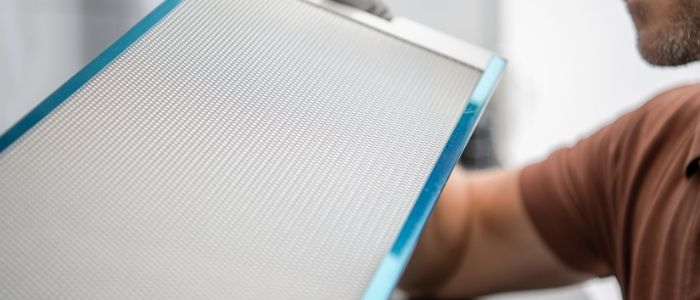
Afterward, regardless of which liquid the filters have been soaking in, you can now hand scrub them with a non-abrasive scrubber or sponge. Again, refrain from using any harsh chemicals like bleach for this process.
Once you’ve scrubbed the commercial hood filters clean, you can decide to either rinse and dry them or allow them to soak in a D-Carbonator liquid to remove additional fats, oils, and greases (F.O.G.s) you couldn’t remove by handwashing.
Can Employees Clean Commercial Hood Filter Themselves?
Exhaust hood systems are extensive, expensive, and highly specialized pieces of equipment that typically require professionals to maintain and clean. However, there are some exceptions.
The commercial hood filters are a few components of an exhaust hood system that employees can clean themselves without professional assistance.

Apart from the commercial hood filters, the majority of the exhaust hood system must be cleaned by professional exhaust hood cleanings as dictated by The National Fire Protection Agency (NFPA).
It is not permissible for employees or owners to clean other areas such as the hood duct system, the exhaust hood, exhaust fans, or other common elements. It is also advisable that professionals replace damaged or broken components within your commercial exhaust hood system, such as belts.
If a restaurant does not allow professional hood cleaners to conduct this work, the business might receive heavy fines or face mandatory closure.
How Often Should a Commercial Hood Filter Be Cleaned?
The frequency of cleaning various exhaust hood systems greatly depends on the part and how much F.O.G.s are created within the building that might stick to parts within the system.
Commercial hood filters should be cleaned daily for high-performance restaurants that emit significant levels of F.O.G.s and at least weekly for lower-performing restaurants that don’t emit these gases and residues as frequently.
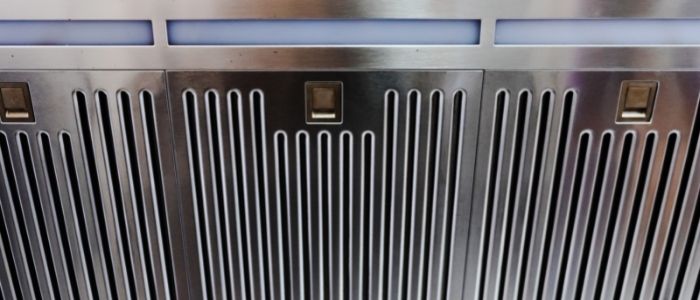
For the safety of your restaurant and those who work and dine there, it is strongly recommended that you clean your commercial hood filters at least once a day to significantly reduce any risks of fires, airborne F.O.G.s, and strain the system might put on your HVAC system.
Additionally, kitchens with clean commercial hood filters that aren’t caked in grease and other residues are typically cooler, which is essential to employee comfort considering the high-heat appliances that function for hours on end in this space.
Comparatively, if you’re curious about how frequently the rest of your exhaust hood system needs to be cleaned, the general rule is to have professionals conduct a thorough cleaning and inspection once every three months.
However, if the exhaust system uses wood or charcoal-burning stoves, it might need monthly cleanings and inspections instead.
Final Thoughts
Cleaning your commercial hood filters is a process that shouldn’t take employees more than 45 minutes to an hour but is crucial to the integrity of your exhaust hood system. Grease buildup inside a commercial hood duct system is one of the major leading causes of fires in restaurants despite being entirely avoidable through daily or even weekly cleaning.
Don’t wait until your commercial hood filters are covered in pounds of grease and other residues before you decide to start cleaning them. Add these crucial pieces of equipment to the restaurant’s list of daily cleaning tasks to ensure they are sparkling at the beginning of every service and absolutely no risk to your business, employees, or highly appreciated patrons.
Also read: how to clean greasy restaurant kitchen floors.


